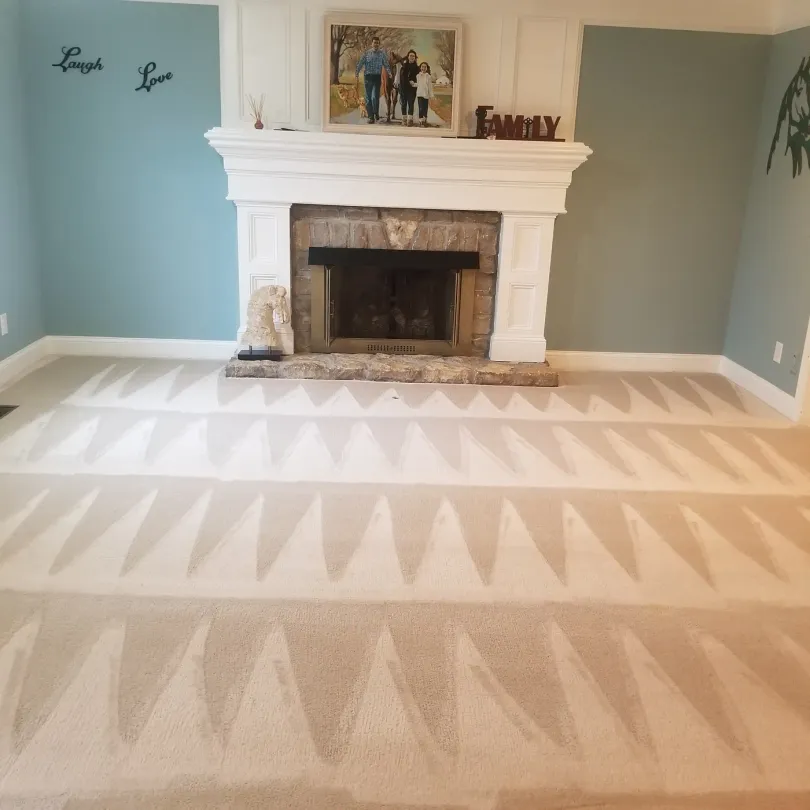
The Part of Carpet Cleaning No One Talks About
Blue Springs homeowners typically think about carpet cleaning in terms of what comes out of the carpet. But what stays in the carpet after cleaning is equally important: water. The speed at which your carpet dries after cleaning has a direct impact on the quality of the result, the health of your home, and whether you end up with a mold problem that's worse than what you started with.
The 12-hour rule: Carpet and padding that remain damp for more than 12 hours after cleaning are at meaningful risk of developing mold and mildew. Blue Springs' summer humidity makes this risk higher than in drier climates.
Why Slow Drying Happens
Equipment Extraction Power
The most important factor is how much water the cleaning equipment pulls out before it's done. Professional truck-mounted systems generate 300–400 inches of water lift vacuum — enough to extract water from carpet pile, backing, and a significant portion of the padding. Rental machines generate 80–120 inches — leaving considerably more water in the carpet. More water left behind equals longer drying time.
Ambient Humidity
Blue Springs sits in a zone that experiences some of the KC metro's most humid summer conditions. When indoor humidity is high, water evaporates from carpet slowly. A carpet that might dry in 4 hours on a dry autumn day could take 10–12 hours on a humid August day. This is a meaningful difference when the 12-hour mold threshold is involved.
Airflow and Carpet Type
Stagnant air dramatically slows drying. Rooms without air movement trap humidity near the carpet surface, slowing evaporation. Plush, high-pile carpets hold more water and dry more slowly than low-pile loop styles. If your Blue Springs home has thick bedroom carpet, expect drying to take longer than in a hallway.
The Mold Risk: What Actually Happens
When carpet and padding remain damp for extended periods, conditions become favorable for mold and mildew growth in the backing and padding layers. This is particularly true in:
- Below-grade carpet — basements have reduced airflow and naturally higher humidity, making them the highest-risk location for post-cleaning mold.
- Rooms with limited ventilation — closets and rooms with small windows dry much more slowly than open living spaces.
- Summer cleanings in high-humidity conditions — Blue Springs' July and August humidity makes summer the highest-risk season for slow drying.
Mold in carpet backing and padding is often undetectable from the surface for weeks. By the time you notice a musty smell, the mold colony is already established. Severe cases may require carpet and padding removal to fully remediate.
How Professional Cleaning Manages Drying Time
- High-extraction truck-mounted equipment — removes the maximum amount of water during the cleaning process itself, leaving carpet as dry as possible before evaporation begins.
- Low-moisture pre-spray technique — applying cleaning solution at a controlled rate reduces the total volume of water introduced to the carpet.
- Air mover placement — professional cleaners may set up high-velocity fans in cleaned rooms to dramatically accelerate drying in humid conditions or rooms with poor ventilation.
- Carpet grooming post-extraction — grooming the pile upright allows air to circulate between fibers, accelerating evaporation.
What You Can Do to Speed Up Drying After Cleaning
- Run your HVAC system on "fan on" mode — continuous air circulation significantly speeds evaporation.
- Open windows on low-humidity days — if outdoor humidity is below 50%, open windows to increase ventilation. Do not open windows if outdoor humidity is high — this slows drying.
- Use portable fans — position fans to move air across the cleaned carpet surface. One fan per room is sufficient.
- Run a dehumidifier in high-risk areas — basements and rooms with poor natural ventilation benefit most from a portable dehumidifier running 6–12 hours post-cleaning.
- Stay off the carpet for the first 4 hours — foot traffic on wet carpet compresses fibers and slows drying.
- Don't replace furniture immediately — furniture legs can leave rust marks or dye transfer on damp carpet. Wait until fully dry before moving furniture back.
Typical drying times with KC Clean Carpets: Most carpets are fully dry in 4–6 hours in normal conditions. High-humidity summer conditions or thick pile may extend this to 8–10 hours. We'll let you know what to expect for your specific situation before we leave.
KC Clean Carpets Serves Blue Springs, MO
Our truck-mounted equipment extracts water far more effectively than rental machines or portable units — meaning your carpet dries faster and you're not left worrying about what's happening in the padding overnight. We're a local, family-owned company serving Blue Springs and the entire KC metro area, backed by a 100% satisfaction guarantee.
Schedule your cleaning at (816) 715-1130 or book online today.
And if water ever gets ahead of you — a burst pipe, a wet basement — our emergency water extraction in Kansas City moves to the front of the schedule.