What Is Sandless Hardwood Floor Refinishing?
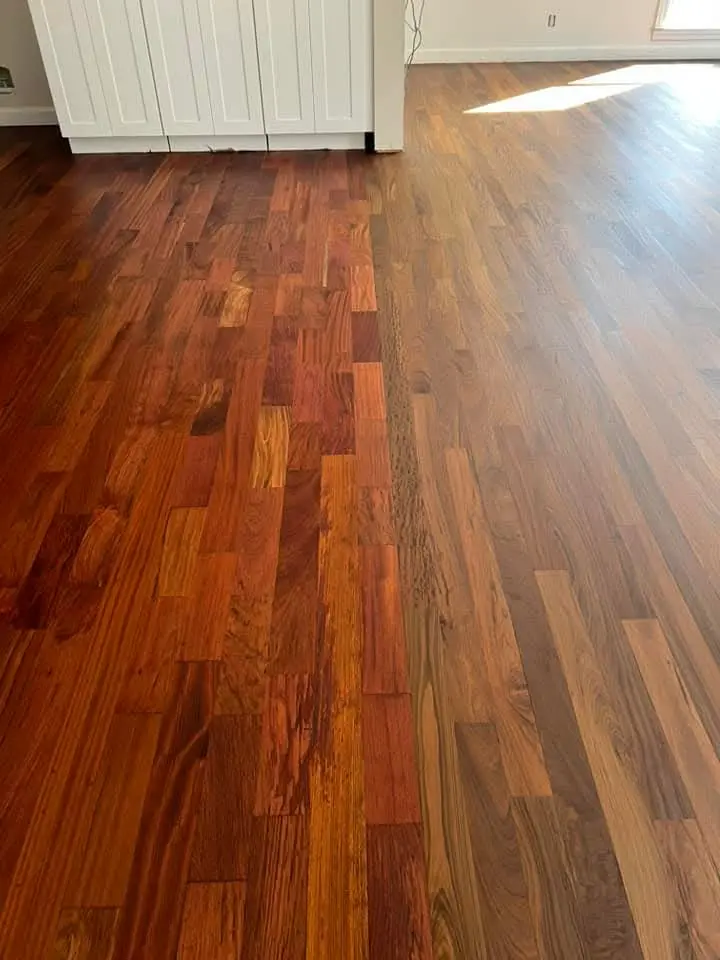
Sandless refinishing — also called screen-and-recoat — is a professional floor restoration process that rejuvenates the finish on your hardwood floors without removing the wood itself. Instead of grinding down the surface with heavy sanders, we use a light abrasion process to key the existing finish, then apply a fresh coat of professional-grade polyurethane that bonds directly to the surface.
The result: floors that look newly finished, with a rich, even sheen — accomplished in a single visit, with no sanding dust filling your home and no need to move out while your floors cure for days.
Is it right for your floors? Sandless refinishing is ideal for floors with surface dulling, minor scuffs, worn finish, and loss of sheen — floors that look tired but aren't deeply gouged or structurally damaged. If your floors have deep scratches or severe damage, traditional sanding may be needed first. We'll assess your floors honestly and tell you which approach makes sense.
The Benefits of Sandless Refinishing
There's a reason sandless refinishing has become the preferred choice for Kansas City homeowners who want beautiful floors without the traditional refinishing nightmare. Here's what sets it apart:
No Dust. Zero Mess.
Traditional sanding generates enormous amounts of fine wood dust that infiltrates every room in your home. Sandless refinishing uses no heavy sanders — your home stays clean throughout the entire process.
Completed in One Day
Traditional refinishing takes 3–5 days from start to walkable. Sandless refinishing is typically complete in a single day, with floors ready for light foot traffic within hours.
A Fraction of the Cost
Full sanding and refinishing can cost $3–$8 per square foot. Sandless refinishing delivers a dramatic improvement at significantly lower cost — making it one of the highest-ROI home investments available.
Stay in Your Home
No fumes requiring you to leave, no rooms cordoned off for days. Your family and pets can return to normal life the same day the work is done.
Preserves Your Wood
Every full sanding removes a layer of wood — and hardwood floors can only be sanded a limited number of times. Sandless refinishing preserves that wood, extending the lifespan of your floors significantly.
Lower VOC Exposure
Heavy sanding generates dust and VOC exposure during application. Our process uses professional-grade waterborne finishes with lower VOC content and faster cure times than traditional oil-based systems.
Sandless vs. Traditional Refinishing: The Full Comparison
Understanding the difference helps you make the right decision for your floors and your life.
| Factor | ✦ Sandless Refinishing | Traditional Sanding |
|---|---|---|
| Dust Generated | ✓ Virtually none | ✗ Significant — enters every room |
| Time to Complete | ✓ 1 day | ✗ 3–5 days minimum |
| Walkable After | ✓ Same day (light traffic) | ✗ 24–48 hours minimum |
| Fully Cured | ✓ 24 hours | ✗ 5–7 days |
| Wood Removed | ✓ None — preserves wood | ✗ 1/16″ per refinish cycle |
| Can You Stay Home? | ✓ Yes | ✗ Often need to vacate |
| Typical Cost | ✓ Significantly lower | ✗ $3–$8 per sq ft |
| Best For | ✓ Dull, scuffed, worn finish | Deep gouges, stains through wood |
Our Sandless Refinishing Process
Every sandless refinishing job follows a precise, professional process developed to deliver consistent, beautiful results:
Step 1 — Deep Clean & Assessment
Before any work begins, we thoroughly clean the floor surface to remove all dirt, wax, oils, and residue. We then assess the finish condition and identify any areas with deeper damage that may need spot treatment or a different approach. You'll know exactly what to expect before we begin.
Step 2 — Light Abrasion (Screening)
Using a professional floor buffer fitted with a fine abrasive screen, we lightly scuff the existing finish across the entire surface. This process — called screening — creates microscopic scratches that give the new finish a surface to bond to. Unlike sanding, it doesn't remove wood and generates minimal dust.
Step 3 — Edge Work
All edges, corners, and areas along walls are hand-buffed with detail pads to ensure complete coverage in spots the buffer can't reach. This attention to detail is what separates a professional finish from an amateur one.
Step 4 — Tack and Final Clean
The floor is thoroughly vacuumed and tack-clothed to remove every particle of abrasion dust before coating. Any remaining debris under a new finish coat will be visible — this step is non-negotiable.
Step 5 — Professional Finish Coat Application
We apply a professional-grade polyurethane finish using a T-bar applicator for uniform thickness across the entire floor. The finish is pulled in straight, consistent lines with the wood grain, ensuring an even, streak-free result. We offer satin, semi-gloss, and gloss sheen options to match your preference.
Step 6 — Cure & Walkthrough
The finish is allowed to cure according to manufacturer specifications. We then walk through every room with you, inspecting the result under different lighting conditions, and ensure you're completely satisfied before we leave.
What Floors Can Be Sandlessly Refinished?
- Solid hardwood — oak, maple, walnut, cherry, hickory, and more
- Engineered hardwood with sufficient wear layer remaining
- Prefinished hardwood — aluminum oxide finishes require a specialized adhesion promoter, which we carry
- Bamboo flooring with polyurethane finish
Note: Sandless refinishing is not appropriate for wax-finished floors, laminate, LVP, or floors with structural damage. We'll assess your floors during our consultation and let you know immediately if traditional refinishing or a different approach is required.
Frequently Asked Questions
How long before I can put furniture back?
Light foot traffic is typically safe within 4–6 hours. We recommend waiting 24 hours before replacing furniture, and 48–72 hours before placing rugs. Full cure strength is reached within 7 days.
Will sandless refinishing fix deep scratches?
Sandless refinishing fills and significantly reduces the visibility of light surface scratches. Deep scratches that penetrate through the finish into the wood itself are best addressed with spot repairs or full sanding. During our assessment, we'll identify exactly what's present and give you an honest recommendation.
How often can sandless refinishing be done?
Sandless refinishing can typically be performed every 3–5 years as part of a regular floor maintenance program. Because it removes no wood, it can be repeated many more times than traditional sanding, which is limited by the thickness of the wood above the tongue-and-groove.
Do I need to move my furniture?
Yes — we'll need the floor surface clear to work. We can assist with moving smaller items, but large furniture and appliances should be relocated before our arrival. We'll give you a clear checklist of what to prepare when you schedule.
What sheen options are available?
We offer matte, satin, semi-gloss, and gloss finishes. Satin is the most popular choice for residential applications — it's forgiving of everyday scuffs and maintains a warm, natural appearance. We'll bring samples to help you choose.
100% Satisfaction Guarantee. Every sandless refinishing job is backed by our satisfaction guarantee. If you're not completely happy with the result, we'll return and make it right at no additional charge. That's the KC Clean Carpets standard — and it's the reason our customers call us back.